 Free shipping over 75€

Sea Moss, also known as Irish moss, is a type of red seaweed that has gained popularity in recent years as a natural dietary supplement. It is notable for its content of iodine, minerals, fiber, and other bioactive compounds.
Sea moss is used in a variety of forms, with gel and gummy bears being among the most popular. But what are its potential benefits, how is it taken, and what is important to know about its properties?
What is sea moss?
Sea moss is a red algae that grows on rocky shores of the Atlantic Ocean. One of the most familiar species is Chondrus crispus , also known as Irish moss. It is found on the coasts of Ireland, Great Britain, and North America.
Unlike terrestrial plants, seaweeds absorb minerals directly from the marine environment, which determines their specific nutritional profile.
Sea moss contains:
- Iodine – necessary for normal thyroid function.
- Potassium and magnesium – participate in normal muscle and nerve function.
- Calcium – important for bones and teeth.
- Iron and zinc – trace elements with important functions in the body.
- Fiber and polysaccharides – compounds that contribute to its nutritional properties.
The exact composition varies depending on the type, origin, growing conditions, and processing of the algae.
What are the benefits of sea moss?
Seaweed is often referred to as a superfood due to its nutritional profile. Some of its potential benefits are related to the functions of the nutrients it contains.
It is important to note that scientific research on the specific health effects of sea moss in humans is still limited.
1. Supports normal thyroid function
Sea moss is known for its iodine content, a mineral necessary for the production of thyroid hormones.
These hormones are involved in regulating metabolism, body temperature, and a number of other processes in the body.
Insufficient iodine intake can impair thyroid function. Sea moss can contribute to the intake of this mineral, but it is not a remedy for thyroid diseases.
Important: Excessive iodine intake can also negatively affect the thyroid gland. Its amount in seaweed can vary significantly.
2. May contribute to normal digestion
Sea moss contains fiber and polysaccharides that are of interest for research on the digestive system.
Fiber is an important part of a balanced diet and supports normal bowel function. Some research on seaweed also suggests a possible prebiotic effect – the ability to support the growth of certain beneficial gut bacteria.
However, this does not mean that sea moss has been proven to improve digestion in all people.
3. Provides minerals important for the body
Depending on its origin and processing, sea moss may contain different minerals:
- Magnesium – participates in normal muscle and nerve function.
- Potassium – important for normal blood pressure.
- Calcium – necessary for the maintenance of bones and teeth.
- Iron – participates in the transport of oxygen in the body.
- Zinc – contributes to the normal function of the immune system and skin maintenance.
Sea moss can be a supplement to a varied diet, but it should not be taken as a guaranteed source of significant amounts of all of these minerals.
4. Contains compounds with antioxidant potential
Red algae contain bioactive compounds, including polyphenols and specific polysaccharides.
In laboratory and preclinical studies, some of them have shown antioxidant activity. Antioxidants are involved in protecting cells from oxidative stress.
However, more clinical research is needed to determine what effect sea moss intake has on the human body.
Sea moss for skin, hair and immunity
Sea moss is often claimed to improve skin, strengthen hair, and boost immunity.
Some of these claims are related to the role of individual nutrients. For example, zinc contributes to the maintenance of normal skin, and some minerals are involved in the normal function of the immune system.
However, this does not prove that sea moss alone leads to healthier skin, thicker hair, or stronger immunity. There is currently a lack of convincing clinical evidence for these specific effects.
How is sea moss taken?
Sea moss can be incorporated into your daily diet in a variety of ways. Depending on your preference, you can choose between gel and gummy bears.
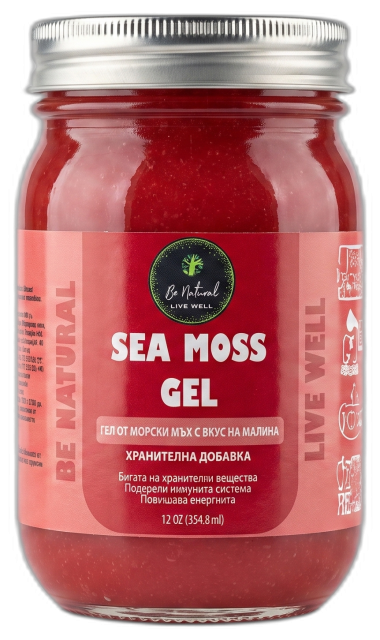
Sea moss gel
Sea moss in gel form is a versatile option that can be taken alone or added to various foods and drinks.
Some of the popular uses are:
- Adding to fruit smoothies and shakes.
- Mix with oatmeal or breakfast.
- Inclusion in dessert recipes.
- Adding to soups and sauces.
This way, you can easily include sea moss in your daily menu without significantly changing your eating habits.
Jelly bears with sea moss
Gummy bears are a convenient alternative for people who prefer a ready-to-eat form of food. They don't require preparation or mixing with other foods and are easy to incorporate into your daily routine.
The two forms offer different ways of use, so the choice depends mainly on personal preference and convenience.
How much to take?
Follow the recommended daily intake listed on the product packaging. Do not increase the amount with the idea that a higher intake will necessarily lead to better results.
Are there any side effects and contraindications?
Despite its natural origin, sea moss is not suitable for uncontrolled use.
Excessive iodine intake: can disrupt thyroid function, especially in people with pre-existing conditions.
Heavy metals: Seaweed can accumulate environmental contaminants, including arsenic, lead, and cadmium. Therefore, it is important to choose products that have been laboratory tested.
Digestive discomfort: Some people may experience bloating, gas, or other gastrointestinal complaints.
Consultation with a doctor is recommended for thyroid diseases, taking thyroid medication, pregnancy, breastfeeding, or other chronic conditions.
Frequently Asked Questions
Does sea moss contain collagen?
No. Sea moss is not a source of animal collagen. It contains polysaccharides and other compounds that are sometimes touted for skin health.
What is the difference between sea moss and spirulina?
Sea moss is a red algae, while spirulina is a cyanobacterium. They have different nutritional compositions and are not interchangeable.
Which is better - sea moss gel or gummy bears?
Both forms offer a convenient way to incorporate sea moss into your daily routine. The gel is more versatile for adding to foods and drinks, while the gummy bears are ready to eat straight from the can. The choice depends on personal preference and the composition of the specific product.
Conclusion
Sea moss is an interesting natural ingredient that contains iodine, minerals, fiber, and bioactive compounds. It can be included in a varied diet in the form of gel or gummy bears.
Some of the nutrients it contains have well-established functions in the body, but the specific health benefits of sea moss itself still need more scientific evidence.
The best approach is to choose quality products with verified ingredients, avoid excessive intake, and consider sea moss as a supplement to a balanced lifestyle.